Education in the Wild

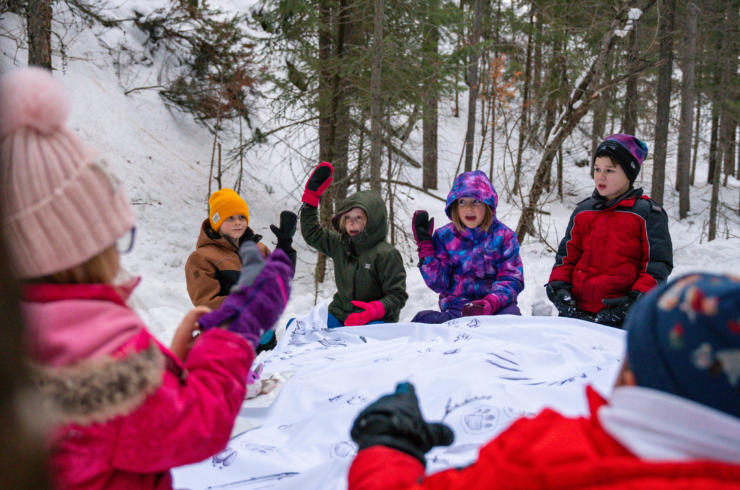
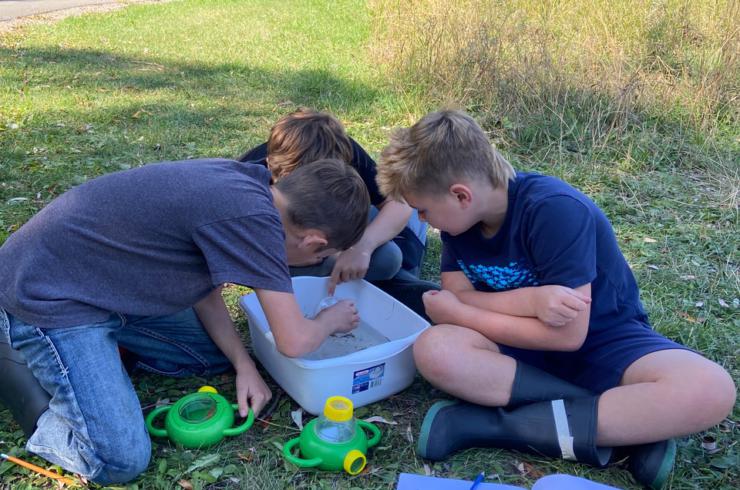
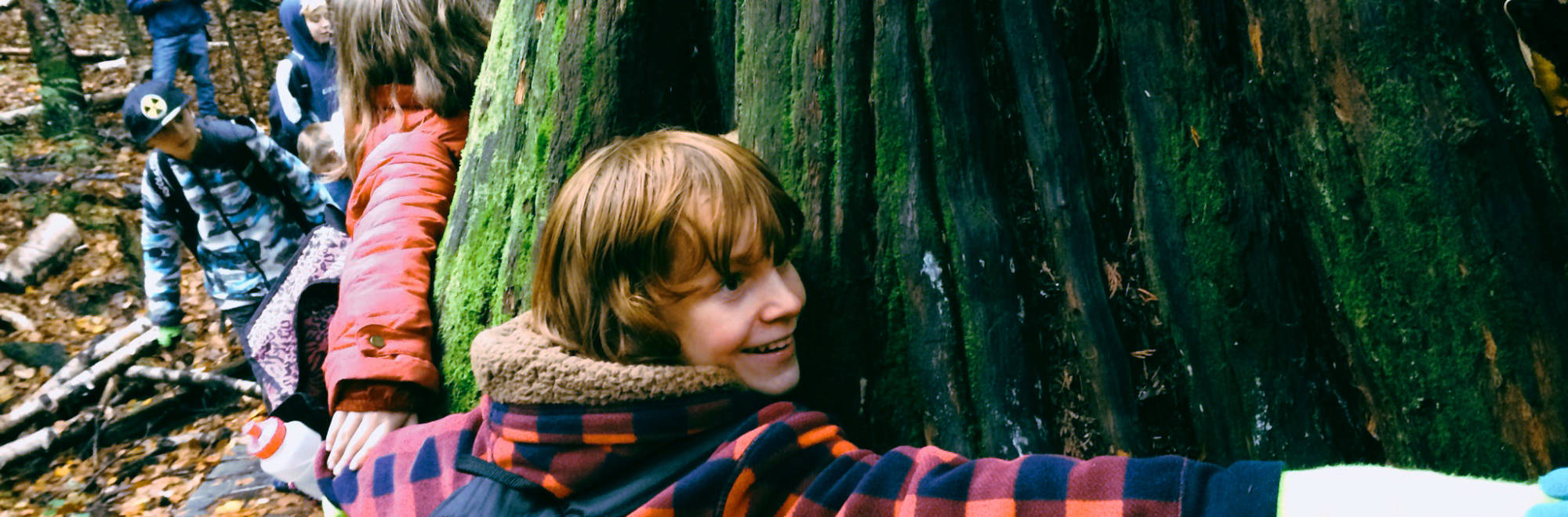
Mapping birdsongs, watching the wetland work, measuring trees and inventorying bugs - sound good to you?

WS_WebButton_Donate_Education_Wild_WebReady-1.png

‘Going on one of Wildsight’s Education in the Wild trips is like taking the kids on a walk through a science textbook.’  ... Read more »

Kids and parents take the Eco-Challenge

Energ5.jpg

Beyond
Recycling students ‘tuned out’ at Earth Hour, working all month on
Eco-Challenge

Beyond Recycling students in nine classes at eight schools in
the Kootenays are participating in a one-month Eco-Challenge to reduce their
energy use and lower their impact on the Earth. ... Read more »

Fernie Nature Tours: A Local Social Enterprise

fnt.jpg

This winter Fernie Nature Tours is stepping into a new phase of social responsibility. Fernie Nature Tours has recently made the shift from an independently owned business to a social enterprise of the Wildsight Elk Valley Branch. A social enterprise applies an entrepreneurial approach to addressing social or environmental issues and creating positive community change. ... Read more »

Biggest year yet for Wildsight’s Winter Wonder

wwBlewett3.jpg

More kids than ever learning the ecology of ‘cool.’ ... Read more »

Grant from The North Face will benefit Basin kids this winter

explore.jpg

Clothing
company’s Explore Fund grant to help Wildsight deliver field trips


The
North Face, a well-known outdoor clothing company, recently awarded a $2,500
grant to Wildsight to help children explore the outdoors. ... Read more »

42 teens waiting to Go Wild!

IMG_6909.JPG

'There’s no such thing as bad weather, just inappropriate clothing.' --Sanne van der Ros  ... Read more »

Eco-Challenge! Coming to a family near you

"If everyone on Earth set out to live like a typical Kootenay
resident, we'd need five Earths to get the job done," says Monica
Nissen, Wildsight's Education program manager in Nelson.

"That's a whopping big eco-footprint." ... Read more »

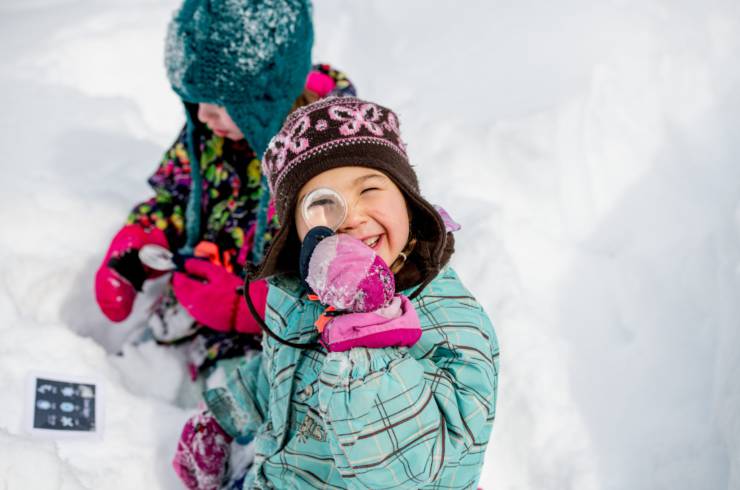
Kids learn cold science with Winter Wonder

by Nelson Daily Staff

Tumbling down snow banks is nothing new for kids, but learning about
the science of snow puts a whole new spin on it for them in Winter
Wonder.

Elementary school students will be
taking ecology classes in the snow during Wildsight’s Winter Wonder
trips in Nelson this month. ... Read more »

Kids learn cold science with Winter Wonder

More classes than ever learn the science of cold in a year of perfect winter weather ... Read more »

Winter wonderland, outdoor field trip

Students in Mrs. Pitcher’s Grade 1 class spent last Friday morning
playing in the snow and learning about winter ecology. Winter
Wonderland, a Wildsight Education in the Wild program, is a program for
Grade 1 to 3 students. It is designed to teach kids about how outdoor
life works in these cold, Canadian winters. ... Read more »

CBT water pilot programs come to six schools

Grade 8 science students from six schools across the Columbia Basin were among the first to take part in Know Your Watershed, a new regionally-based water stewardship initiative of Columbia Basin Trust (CBT) and Wildsight. ... Read more »

Classroom with Outdoors now offers fall programs.

CWO_educators_dipping.JPG

Ecological field trips available this September and October; both spring and fall programs are now free of charge

One of Wildsight’s environmental education programs is offering a fall series for the first time this September. Classroom with Outdoors is now available to classes who want to enjoy the fall weather while they learn about grasslands, wetlands and forest ecosystems. ... Read more »

Go Wild trip dates announced. Sign up here today!

GoWild2DQ.jpeg

Are you aged 14 to 18? Join Wildsight for a six-day guided wilderness adventure

School’s out and many kids are moving inside to play video games, surf the web and watch TV. Wildsight is offering Go Wild Youth Adventure hiking trips for youth aged 14 to 18 to help offset the trend. ... Read more »

What a difference a decade makes

Columbia Basin Trust and Wildsight celebrate 10 Years of Education in the Wild

Columbia Basin, B.C. ... Read more »

Help keep Education Wild. Donate today!

“Youth are looking for something to believe in and that will inspire them. ... Read more »

Beyond Recycling program named community champions

 - Left to right: Students Jessica Hutchinson and Linnea Uphill-Benischke, Dawn Deydey, Sally Masters (representative from BC Hydro), and Megan Lohmann.jpeg

A recycling education program got the vote of approval from not only its students, but judges in a community champions award. ... Read more »

Beyond Recycling

To the 2009-2010 students of Beyond Recycling: ... Read more »

Earth Day kids go Beyond Recycling

But—will Beyond Recycling go beyond this year? ... Read more »

Landfill investigation set to uncover impacts Student detectives go ‘Beyond Recycling’ in new Wildsight program

What really happens when we throw things ‘away’? Is there even such a place? ... Read more »

Adapting Winter Wonder to a warmer winter

Biggest year ever for classes, warmest year for weather

Students Go Wild hiking Flathead

By ANNALEE GRANT

Wildsight's Go Wild summer program had its first hike of the summer, with another coming up on Aug. 23 to 28.

The first hike took place in July with 14 kids taking part.

"The kids had a fantastic time, they said it was a real positive experience," said Liz Hardwick, Wildsight's Go Wild program manager.

The attendees spent nearly a week in the Flathead Valley, covering not only over 30 kms of rocky mountain terrain, but the issues facing the pristine valley. The kids who  went along were far from experienced hikers.

Most of them had never climbed a mountain before," said Hardwick. Despite their lack of experience, Hardwick says the kids did extremely well.

"One kid said she could do a lot more than she thought she could do," said Hardwick.

Along the way the kids learned about packing light for hiking, maps and navigation and other stranger topics.

"A lot of them talked about learning how to go to the bathroom," said Hardwick

The 14 to 19 year olds had to camp and hike together, and Hardwick says they got along great.

"I think  one of the neatest things was seeing the support within the group," she said.

Hardwick says the hike scheduled to start Aug. 23 will "possibly traverse the Purcells from east to west," although the exact route is still being discussed.

"I like the idea of them experiencing a mountain range that kind of joins the East and West Kootenay said Hardwick. The trek is open to kids from both sides of the Kootenays.

Experienced mountaineers and Wildsight member Jenny Meens and Dave Quinn will be leading the August group.

For more information, or to register head to www.wildsight.ca or  call Wildsight at (250) 427 9325. The cost of the trip is $350, but subsidies are available to offset the cost. Ages 14 to 19 are welcome to participate.

From the Kimberley Daily Bulletin and Cranbrook Townsman, July 21, 2009.

Wildsight invites local youth to Go Wild

By Carolyn Grant
Kimberley Daily Bulletin
July 20, 2009

As Bulletin readers will recall from a few weeks ago, Selkirk Grade 9 students enjoyed a wonderful adventure in Akamina Kishenena Provincial Park, thanks to Wildsight's Go Wild program.

This August another Go Wild summer backpacking adventure is being offered, and it is available to all Columbia Basin youth ages 14 to 19.

Program coordinator and adventure guide Liz Hardwick says that the week long adventure - this trip will take youth into the Purcell backcountry - is a way for youth to find camaraderie, adventure and confidence.

"The Go Wild Summer Adventure is a week-long, guided backpacking expedition into the Purcell Mountains," said Hardwick. "It gives young people a chance to connect with wild places during a life-changing journey. And it inspires the next generation of environmental leaders."

"No previous camping experience is required," Hardwick said, "just enthusiasm and a willingness to learn."

The six-day hike is scheduled for August 23 to 28 at a cost of $350. Costs include food, and all camping equipment is supplied by Wildsight. (Participants supply their own outdoor-appropriate clothing.) Help is available to meet costs. Wildsight does have some subsidies available for students who wish to take part but can't afford it.

Wildsight is able to offer this kind of help because of continued support from organizations like Columbia Basin Trust.

"We are proud to support the Go Wild Summer Adventure trips," said Dana Welsh, Columbia Basin Trust Youth Liaison. "Not only will it allow youth to connect with the outdoors, but the skills they will be learning in how to work together on challenges or how to support one another during the week, those will enable them to grow and will help them learn how to become better stewards of not only the environment, but of each other and the people they may work with in the future."

Hardwick says a week in the backcountry away from the world of iPods and Facebook is an intense experience for young people and they learn a lot about themselves.

"They gain confidence in their abilities, learn to function as part of a team, and get to know the mountains. They develop a sense of responsibility for the place they live in," she said.

More information about the Go Wild program is available at www.wildsight.ca/summeradventure or by calling (250) 427-9325.

Instant mashed potatoes are gross (don't add Kool Aid)

By Tom Martin
Kimberley Daily Bulletin
July 10, 2009

June 25, Day 5.

OK. Day 5 of the Wildsight Go Wild 2009 expedition from Selkirk Secondary School was a tad anti-climactic. There's nothing like a three-hour drive on logging roads to kill the joy and connectedness we had experienced in the last five days. But it had to be done, and provided us with time to reflect on the trip. The observation in the headline was by one of the 14 grade nine students (Natalie) who I had the pleasure of accompanying on this trip to Akamina-Kishinena (AK) Provincial Park. I found her comment both humourous and informative.

The leaders all had interesting reflections. "The direct experience is the best way to learn," said 19-year-old co-leader Dan Moe. Selkirk teacher, co-leader and creator of the Go Wild program, Jenn Meens added "It's important to take kids to a place where they can be independent and respectful."

I know the words "independent" and "respectful" and "kids" don't often appear in the same sentence, but I was witness to this phenomenon and very pleasantly surprised.  The long drive deep into the wilderness may have helped create the respect that Jenn was talking about, as did the thorough preparation and training the kids received before the trip.

Extremely wild places like AK Park fulfill Jenn's interpretation of a place. "A place where there are natural consequences for their behaviour," she added. In urban life, some kids grow up in an environment where there are few consequences for any behaviour. I agree with Jenn that it is vital for young people to confront realities like physical discomfort, gravity, food, clothing, and shelter management, and the teamwork necessary to keep self and others safe and happy in a beautiful, but potentially hostile environment.

"The world is facing its greatest problems ever," said co-leader Liz Hardwick, "and the youth of today have the greatest capability to change it. But they are trapped behind a series of screens. Movie screens, computer screens, TV screens."

I agree with Liz that it's unhealthy to have so many young people so "plugged in" which paradoxically unplugs them from the beauty and rhythms of the natural world. I feel lucky to have been raised in a time when parents booted their kids outside with the only structure being "don't be home late for dinner or else!" We were otherwise free to explore and invent the world in our own ways. But as parents, my generation clearly does not take kids outside enough and we don't take them away from civilization long enough. But both Liz and I have hope that this younger generation will ultimately disconnect itself from the noise of modern life and seek to live in greater harmony with nature than recent generations have.

In this context trips like Go Wild and indeed many other kinds of field trips are of the utmost importance - more important even (and I know my students will find this hard to believe) than one of my soaring lectures on history or politics. Note to myself: talk with Wildsight about a portable, wilderness classroom (yurt?) for in and around Kimberley. Maybe kids would learn more if the setting they learned in were beautiful? Hmmmmm.

Another interesting observation I had was how diverse the ways were in which students connected to nature. There was a broad spectrum. Many of the boys, for example, saw the area for the outstanding hunting potential it contained while others on the trip were vegetarians.

But there was no animosity between anyone. The hunters respected the vegetarians and vice-versa. From my spot as a red meat eater, I found myself enjoying the hunters' perspective that obtaining meat from the wild lands is better than feed lot meat any day.

Some environmentalists see a contradiction between hunting and environmental protection, but I see them as mutually dependent. Ethical, intelligent hunting groups help buy land and lobby government for wilderness protection. Unfortunately even the hunters may not have enough clout to save the Flathead from destructive resource extraction industries. Most of the momentum in this debate seems to be with development, but a strong opposition is making their voice heard. I would rant some more about this, but I said my piece already in yesterday's article. Save the Flathead. Period.

I dropped the kids off at Selkirk around 6pm. Indy and I left them to clean up the last of their gear while parents gathered - looking relieved that their precious little ones had survived. For the next few days I found myself imagining the Go Wild kids telling story after story about the trip. There were likely a few that had to be told to stop talking about the trip after two or three days.

I know these kids were deeply touched by their experience. I know there are now 14 more people who have a deeper awareness of and appreciation for our ever-diminishing wild places. 14 more people who have a voice to use and stories to tell about their great trek deep into grizzly country, into Canada's largest intact, undeveloped wilderness.

"Totally legit."

Walking on sunshine

By Tom Martin
Kimberley Daily Bulletin
July 9, 2009

June 25, Day Four.

I awoke in reverie. I felt honoured and blessed to be dry and listening to the songs of the forest. I must be up early because the camp is quiet, so I bask in the glow and thrum that only high altitude, wilderness, and fresh air can bring. Yesterday's successful bid to the summit of Mt. Rowe reverberated in my soul and I felt like pinching myself to make sure I wasn't dreaming. But if I had been dreaming, my daze would have been shattered as a wild man suddenly began to wreak havoc in the campground.

I had forgotten that 19-year-old co-leader Dan Moe was on wake-up duty that morning, and by the time he was finished with his shattering banshee bellowing beside each of the tents, I knew I was awake and camping with the 2009 Go Wild expedition from Selkirk Secondary School.

One might expect that after the thrilling climb to the top of Mt. Rowe everything would be anti-climactic, but one would be wrong. Day four was to bring more stunning beauty and a growing sense of self-confidence and at-oneness that we all had achieved through three days in the remote, rugged wilderness of Akamina-Kishinena Provincial Park.

We broke camp and honoured our custodial agreement with BC Parks, leaving the campground spotless with toilet cleaned, fire wood stacked and ready, and not a scrap of garbage anywhere (students packed out garbage left by previous, less meticulous campers).

With some serious packing and climbing already under our belts, and with packs lightened by our rapidly disappearing food stores, the 3km trail to Wall Lake was, well, a walk in the park.

Like the vistas that overwhelmed them on the summit of Mt. Rowe, few were prepared for the ecstatic beauty of Wall Lake. The only one in the group not to comment on the intangible glory of Wall, still with ice covering the far end, was my golden retriever Indy, who did not hesitate to go for a nice long swim in the chilly waters.  As they did on the peak of Rowe, the leaders separated the students for some quiet, solo reflection. I found these moments of the trip very powerful - not just for myself, but in the wisdom of un-plugging our youngsters from the social realm to reflect on just how beautiful life is and how nature, if we let her, will sing to us.

We walked to a lovely lagoon on the southwest side of the lake where Leader Liz, a Wildsight employee from Nelson, had prepared an amazing lesson for the students. There, beneath the oldest rocks in the Rockies (1.3 billion years old), pushed skyward by unfathomable tectonic forces, we held a mock United Nations summit on the future of the Flathead Valley.

I want to take a moment here to recognize the tremendous contribution of Wildsight, our ubiquitous Kootenay environmental group. Not only was Wildsight subsidizing each camper's trip ($100 per camper and use of the Kimberley Car Share truck), they were also providing the teaching services allowing yours truly to say nothing for a change and take it all in. In the lesson, I was Mr. Moon, a Korean UN bigwig being asked to judge on an important environmental debate!

Our mock summit paralleled an actual summit that the UN was holding at the same time, with representatives from Wildsight, other environmental groups, residents, British Petroleum, other mining interests, and various other experts and dignitaries from around the world. The topic: Is the integrity of Waterton-Glacier International Peace Park, a world ecological heritage site, threatened by economic development in the Flathead? Though the kids would likely have been just as happy to sit and bask in the sun below the towering lithic wall from which the lake gets its name, they gamefully participated in the exercise, each role-playing the various stakeholders' positions on the issue.

I congratulate Liz on such a creative and balanced lesson.

The skinny on the UN question about the Flathead in my humble and learned Korean position? Yes, the area is threatened by resource extraction developments like coal-bed methane. At a time when the world is turning away from fossil fuels for a number of good reasons we should stand up and raise our voice to keep this area pristine. The Waterton-Glacier/Flathead area has the largest diversity of wildlife (bears, cougars, wolverines, wolf, coyote, elk, moose, deer, sheep, goats and countless birds, rodents, reptiles, plants, etc.) anywhere in North America. It seems absurd that anyone would argue in favour of destroying or even altering the delicate balance which sustains this diversity for the sake of some unsustainable fuels and corporate profits.

When we left Wall Lake and walked down the Akamina Valley, I overheard a group of girls singing the 80's pop tune "Walking on Sunshine." And indeed we were. The valley was teeming with life, a verdant explosion of solar energy and chlorophyll. Birds and bugs sang and flew in all directions. Flowers were popping open by the minute (although about two weeks would be needed for the peak blossom event). And along the trail: plenty of evidence, including large footprints of bears, that we were sharing this valley with some of the noblest and most majestic creatures in creation.

We pitched our tents beneath the infinite of the crystal clear heavens. The moon and the stars imparted their final blessings on us, beckoning us not to forget the sense of wonder and awe that had crept into our hearts and souls. Around an LNT (leave no trace) fire the kids shared so openly and profoundly about their experiences that I was deeply moved. I've taught a lot of lessons over the past few decades but little I've ever said or done has had the kind of immediate impact that I could see this trip had made on these kids.

We would all sleep soundly that night, our bodies now accustomed to this wonderful new lifestyle of fresh air, vigourous exercise, and a thin mat for a bed. Coyotes were yipping in the forest just above us. I put Indy on a chain and lay outside my tent looking at the stars for a long time before climbing inside for the last sleep of a great trip.

Tomorrow: Reflections on outdoor education, blessings, and hope.

Day 3: The hike to Mt. Rowe

By Tom Martin
Kimberley Daily Bulletin
July 8, 2009

Mt Rowe
June 24, Day 3.

In the first two days of our expedition to Akamina-Kishinena Provincial Park, the 14 Selkirk "Go Wild" participants had been given many lessons, which, had the trip ended there, would have resonated with them for a long time. But climbing Mt. Rowe on Day three would prove to be a day that would last a lifetime. My skill as a writer will not be adequate to describe the impact that this day had on me, let alone the students - many of whom had never reached the summit of any mountain before.

"When I looked at the mountain before we started," said grade nine student Brad Wright around a low-impact fire the next night, "I thought 'there's no way we can climb that in a day.' I still can't believe we did it." Indeed, from our base camp the peak looked a long way away and much too high to reach with a group of novice backcountry teenagers.

I can't overstate the skill of the leadership team as they guided the group towards the sky. Jenn Meens, Selkirk teacher and creator of the GoWild program (which Wildsight now delivers to schools throughout the Kootenays) had already lead a group of Selkirk students up Mt. Rowe in 2007, with Dan Moe along for the ride as a student leader. Liz Hardwick, Nelson resident and National Outdoor Leadership Trainer (www.nols.edu) was hired by Wildsight to co-lead this trip (and others in the area) after Jenn landed a full time outdoor education teaching position at Selkirk. Together, this trio demonstrated superbly professional guidance on what is, without being dramatic, a hazardous undertaking.

The summit bid began with a bush-whack along the cut line that is the border between BC and Alberta. No actual trail existed for this climb, and we did not descend along the exact same route we went up. Following the cut line was a thrill to some of the students, one of whom later said "I went to Alberta at least 40 times today!"

The cut line gave way to sub-alpine scrub and loose rock. Seeing that if the group stayed together those in the lead might kick rocks sown on those behind, the leaders decided to split into four smaller groups which would ascend parallel to each other. With students at the head of each of these smaller groups we moved in a long, slow line careful of each foot fall which could bring trouble.

We regrouped in the open shale above the tree line and had a snack. In one of the most dramatic moments of the climb, we walked shoulder to shoulder towards a ridge/cliff about 50 metres below the summit. As we approached the ridge, we were looking east to one of the most stunning views anywhere in the world. With the two Rowe Lakes below us, we lifted our heads to see the mountains of Waterton National Park give way suddenly to the bald, flat prairies of Southern Alberta. To use some modern, student vernacular to describe the view, it was "totally awesome," and "dece," and "completely legit."

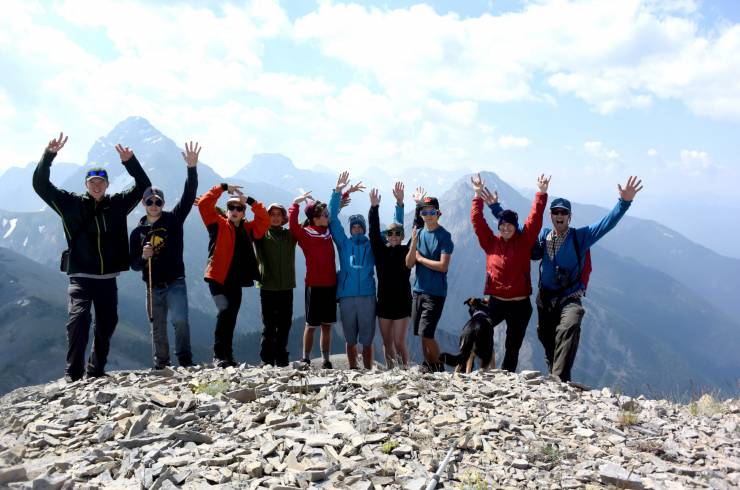
Moments later we stood on top of the world. Below the summit to the south we could see glacier-carved valleys running parallel to each other and at the head of each were towering peaks with lakes at their feet: Cameron Lake, Forum Lake, Wall Lake.

Of course, at 7500+ feet above sea level, the wind blows constantly, making conversation difficult. But that did not matter because these usually social and gregarious teenagers were speechless anyway, mouths gaping at the wonderful world they inhabit.

Skillfully capitalizing on the students' momentary dumbness, the leaders separated them and had them take out their journals and just reflect for a while. The kids needed little coaxing to practice some solitude. Many were disappointed when we finally pulled them back together; they needed more time to chronicle the powerful moment they were experiencing.  Around the campfires of the next two nights they woudl re-visit the summit of Rowe again and again. The most common theme to emerge from their peak experience was a sense of genuine accomplishment - that they had done something special and noteworthy. But these are my observations. The students' words can say it better than I can:

"Nothing mattered that would matter in towns or cities." - Maria

"Embrace every moment. Time doesn't matter." - Natalie

"You don't need to have access to electricity to have a good time." - Jasmine

"Seize opportunities for whatever happiness they may hold." - Karina

"Gorgeous, breathtaking, relaxing." - Rowan