Wildsight and Y2Y grateful for new signs at Kootenay Pass

Where wildlife and highway corridors collide, extra road caution is advised

By Dave Quinn
For Immediate Release
September 22, 2009

Creston, B.C. — Wildsight and the Yellowstone to Yukon Conservation Initiative are applauding the B.C. Ministry of Transportation and Infrastructure (MoTI) for its recent efforts on behalf of road safety and mountain caribou protection.

The MoTI installed wildlife crossing signs along a seven-kilometre stretch of “deadly” Highway 3. The signs could help reduce wildlife deaths and increase human safety at the summit of Kootenay Pass, where the highway crosses through critical mountain caribou winter range.

Earlier this year, three mountain caribou, including a pregnant female, were hit by speeding vehicles along the highway section. All were killed.

“We hope these larger, more visible signs will help slow drivers down,” said Dave Quinn, Wildsight’s Purcells program manager, “and help make this often deadly highway safer for both humans and wildlife.”

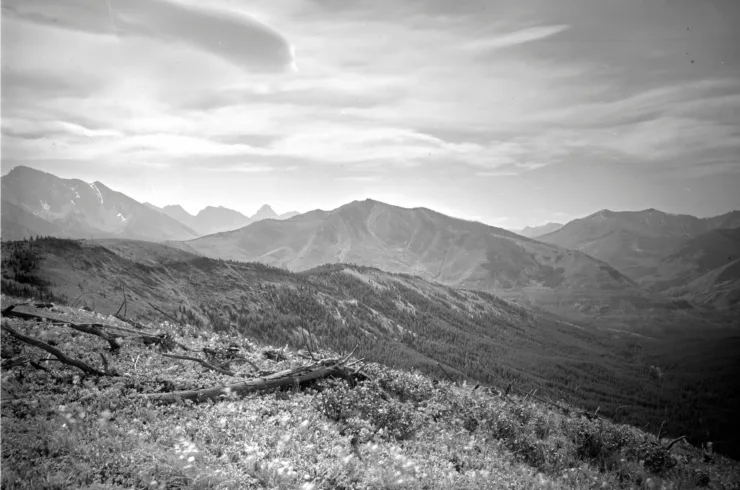
Wildlife biologists say the highway has become a major ‘fracture line’ for wildlife populations in the southern Selkirk and Purcell mountains, and for mountain caribou, Kootenay Pass is its deadliest section. It’s where the highway corridor crosses a critical movement corridor of the South Selkirk herd.

"Mountain caribou are the most endangered large mammal in the southern Canada and play a critical role in the Selkirk ecosystem,” said Rob Buffler, executive director of the Yellowstone to Yukon Conservation Initiative (Y2Y). “This small herd depends on being able to cross Highway 3 where it bisects habitat on Kootenay Pass. We hope the new signage will increase driver awareness and get people to slow down on this short section of highway.”

“The 4 new signs mark a good first step toward reducing vehicle collisions with mountain caribou,” Quinn said. “We understand the MoTI is still investigating decreased speed limits through the summit section and alternate road salting techniques to minimize the time animals spend on the road, where they often linger to lick road salt.”

The southern Purcell and Selkirk mountains are a critical connector for large mammal populations that span the Canada-U.S. border. Ensuring animals can safely move through this landscape is a high priority for land managers and conservation groups like Wildsight and Y2Y.

In fact, Y2Y and Wildsight have spearheaded a four-year transboundary conservation effort called the Cabinet-Purcells Mountain Corridor Project. It’s a partnership of more than 70 groups, individuals, First Nations, and biologists from both sides of the border. These partners identified Highway 3 as a primary conservation threat to this landscape, as human settlement and recreation pressures have increased dramatically along this corridor in recent years.

“Key actions for recovery of the Selkirk herd identified by the mountain caribou science team include habitat protection, controls on winter motorized recreation, and targeted predator control,” Buffler said. “Another critical piece in the complicated puzzle of recovery efforts is to minimize—or even halt—mountain caribou deaths on Highway 3.”

Quinn concurred, saying more careful driving on the highway could help ensure that the south  Selkirk herd survives. “This is one of just 13 remaining isolated herds, but it’s a success story. The population has increased recently. Habitat protection, controlled winter recreation access, targeted predator control and a population augmentation program have helped the herd grow from a low of 25 animals to an estimated 45 this year. 

But there were three documented highway kills last winter. Controlling highway mortality is an obvious next step in the complex path towards mountain caribou recovery. That’s why we applaud the ministry’s new signs and the efforts being made to make Highway 3 a safer place—for humans and for mountain caribou.”

—30—

About Wildsight

Wildsight works locally, regionally and globally to protect biodiversity and encourage sustainable communities in Canada's Columbia and southern Rocky Mountain region. This area is internationally recognized as a keystone to conservation in western North America. For more information, please visit www.wildsight.ca.

Contact:

Wildsight

Dave Quinn, Purcells program manager
250.427.5666 or 250.427.8878 • daveq@wildsight.ca

Yellowstone to Yukon Conservation Initiative:

Wendy Francis, Director of Conservation
403.763.8633 • wendy@y2y.net

AttachmentSize
WS_Y2Y_PR_CaribouSign.pdf66.63 KB