Columbia River and Wetlands Boating Regulations Final comment period — people who care need to speak up now

Aug 05, 2009

The Columbia River needs your support for the last of three boating regulations ...

Please read this article, and then take action.

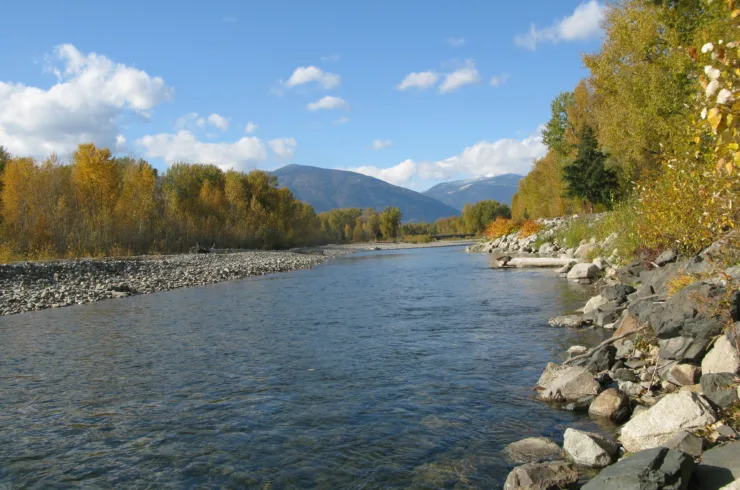
The Columbia River and Wetlands need your support so the last of three boating regulations can see the light of day. This last regulation would restrict motorized boating activity in the Columbia River between Fairmont Hot Springs and Donald Station (except on Lake Windermere) to motors of 20 hp or less.

For more than 10 years, Wildsight has been working to have boating regulations put in place that would protect the Columbia Wetlands Wildlife Management Area from the negative impacts of high-powered motorized recreation.

The final amendment is now open for public comment—and anyone who cares about conserving and maintaining this natural treasure is encouraged to comment, either in writing or by attending one of three open houses at the end of July. (See below for a schedule of the open houses and how to comment in writing.)

“It’s time for people who care to speak up,” said Ellen Zimmerman with Wildsight. “We’ve been helping keep this issue on the ‘front burner’ of the Federal Government for a long time—and we’re so close to having three boating regulations that will help protect the Columbia River and Wetlands and that are considered fair by the majority of residents.

“Your voice is absolutely vital in helping seal a decade of work that will protect the natural beauty and ecological values of the Columbia River and Wetlands far into the future.”

What you need to know about the amendment and regulations

The first two regulations—the prohibition of power-driven or electrically-propelled vessels in the Columbia Wetlands, and the prohibition of water-skiing—are in the last stages of the Transport Canada’s lengthy legal and public process.

The other proposed amendment used to be a “seasonal prohibition on the operation of power-driven vessels in the main channel of the Columbia River from March 1 to July 15, with the exception of electrical propulsion.”

Due to public comment, however, the amendment was recently revised to allow for historic use of the wetlands. Because it was revised—by Wildsight and the Ministry of the Environment, with the support of the Columbia Wetlands Stewardship Partners—it has to go through a new public comment process.

The amendment is now “to allow for historic use of  motors of 20hp or less using the Columbia River between Fairmont Hot Springs and Donald Station—except on the waters of Lake Windermere.”

20 hp prohibition is a good compromise

Wildsight supports this amendment and would like it to become law in Canada.

“We support the 20-hp-prohibition because it allows for historic use of the Columbia River and is a good balance between extremes of ‘no-motorized’ and ‘over-motorized,’” Zimmerman said.

“Whether you believe, like Wildsight, that a less-than-20 hp regulation is a good compromise, or whether you believe it is too much of a compromise, we hope you will comment to Transport Canada, either in writing, or at one of the open houses. We cannot overstate how much this will help protect the integrity of the river and wetlands.”

To comment in writing ...

Send your comments regarding the proposed regulation to:

Tim McCann
Transport Canada, Office of Boating Safety
620-800 Burrard Street
Vancouver BC V6Z 2J8
email:
timothy.mccann@tc.gc.ca
fax: 1.604.666.5444

Hon. Jim Abbott
MP Kootenay East
125D Slater Road
Cranbrook BC  V1C 4M4
email: abbotj@parl.gc.ca
fax: 1.250.417.2253

Hon. John Baird
Minister of Transport, Infrastructure and Communities
Tower C
330 Sparks St. 
Ottawa ON  K1A 0N5
email: mintc@tc.gc.ca
fax: 1.613.995.0327
 

More information: www.tc.gc.ca/marinesafety/debs/obs/resources/regulations/crwbc.htm

A little bit of background

Wildsight is one of the founding partners of the Columbia Wetlands Stewardship Partners an umbrella group that includes NGOs, government and industry.  

This group, representing  broad interests, made the unanimous recommendation to Transport Canada that urged for a 20-hp-maximum regulation. This demonstrates wide support for the regulation.

What’s your view on the 20 hp maximum?

Although there is wide support for the 20-hp-maximum regulation, it’s perfectly fine for people to ask for a more stringent regulation in their comments, said Zimmerman.
“This is where individual people can really make a difference in protecting the wetlands,” she said. “You might agree with the 20 hp maximum—you might want to see no motorized at all in this part of the river. Whatever your view, now is the time to articulate it. This is what a fair process is all about.”

About the Columbia Wetlands

  • The Columbia Wetlands are more than 180 kilometres in length — making them some of the longest intact wetlands in North America.
  • They are critically important to migratory birds and resident birds and wildlife.
  • These 25,000-hectare wetlands represent one of the few remaining intact portions of the Pacific Flyway, a crucial path for migrating birds.
  • This biologically diverse expanse is the headwaters of the Columbia River, the largest river flowing into the Pacific Ocean from North America.
  • Through Wildsight’s work, the wetlands were chosen as Ramsar Wetlands of International Significance in 2005.

“Because so many of the wetland ecosystems on the Columbia River have been lost through damming, draining and flooding, the Columbia Wetlands are even more important for wildlife and migratory birds,” Zimmerman said. “They are a true ecological treasure.”


Take Action Now

Write an email today »