Milfoil and Mussels - Aquatic Invaders
Year 2 of Wildsight’s Columbia Wetlands Invasive Species Plant Project
Rachel Darvill started Wildsight’s newest program last year. Darvill, a biologist who lives in Golden, met with land managers, community groups and a BC Park Ranger. She identified, mapped and worked with helpers to pull invasive plants out by their roots.
The focused on terrestrial plants like knapweed and common tansy last year. This year, she’ll start hunting for aquatic plants (like Eurasian watermilfoil) in the wetlands. And she’ll start looking for two species of mussel that would wreak havoc should they ever get ìattachedî to the sensitive Columbia Wetlands ecosystem.
The strategies behind aquatic sampling
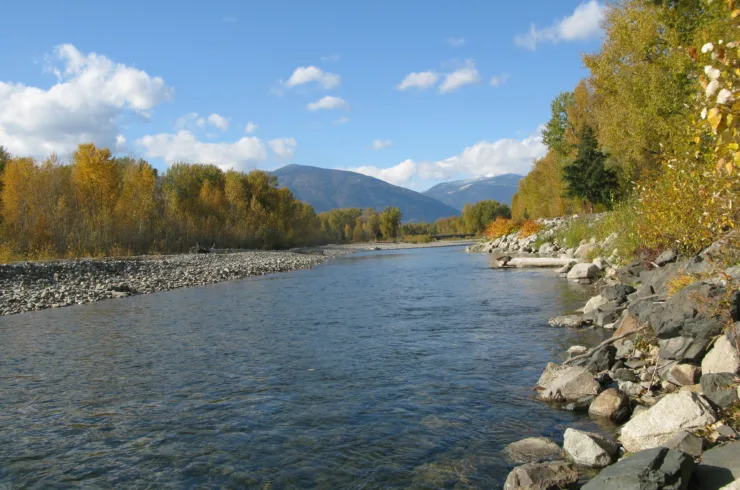
In late June, Darvill will start sampling in key areas: access points, boat launches and roads, and major sloughs where waterfowl counts tend to be high.
"There are 12 major access points into the wetlands along the 180-kilometre stretch from Donald to Canal Flats," Darvill said. "These are places where non-native plant species tend to be introduced."
Sloughs popular with migratory waterfowl are also vulnerable, she noted, because birds carry plant fragments and seeds from place to place, and plants like Eurasian watermilfoil can become introduced to the wetlands in this way.
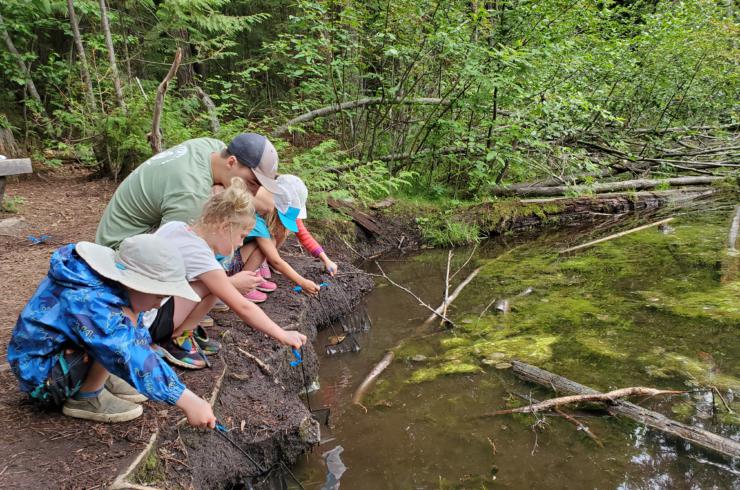
"We will use a thatch rake to sample for aquatic invasive species," Darvill said. "We throw the rake in the water, rake the ground, and identify all the aquatic plants we bring up."
"This will create a baseline inventory for aquatic plant species in the Columbia Wetlands," Darvill said. "We don’t really know much about plants in the Columbia Wetlands or about what invasive plants might already exist there. It’s likely there aren’t currently any large infestations, because people would be likely to report them, but there could be smaller infestations that would become management priority sites for removal."
Making sure mussels don’t muscle in
In the course of her research, Darvill learned that the Columbia Wetlands could be the next "hot spot" for other aquatic invaders, these ones not green and rooted, but striped and hinged.
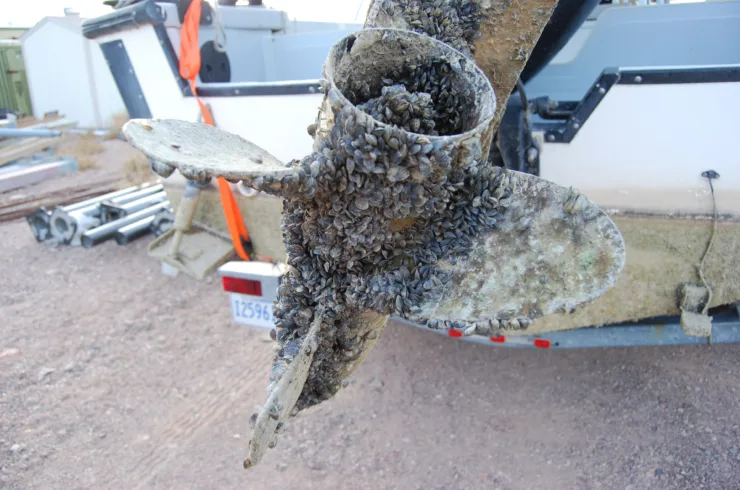
Scientists warn that wetland waters could fall prey to the dreaded zebra mussel and its similarly dreadful cousin, the quagga mussel.
To test the waters, Darvill is working with Heather Leschied, of Wildsight’s Lake Windermere Project, to create artificial substrates that attract mussels. The substrates, really PVC piping, netting and rope, will be lowered into the waters of the Columbia River and Lake Windermere and left for mussels to attach themselves to, if they are around. Darvill will check them periodically to see if the voracious, fingernail-sized mussels are present.
"We need to stay on the look out for quagga and zebra mussels," Darvill said. "They spread rapidly and, they are encroaching into Western Canada."
Can you recognize invasive aquatic plant species?
Download a list—with photos—to help you identify them
BC’s Most "Unwanted" — from the BC Invasive Plant Council