Classroom with Outdoors
Introducing… ecosystems!
Wildsight’s Classroom with Outdoors is the Columbia Basin’s premier environmental educational programming for intermediate students.
It’s a great way to engage and inspire this curious age group!
Grade 4 – Grade 5 – Grade 6 – Grade 7
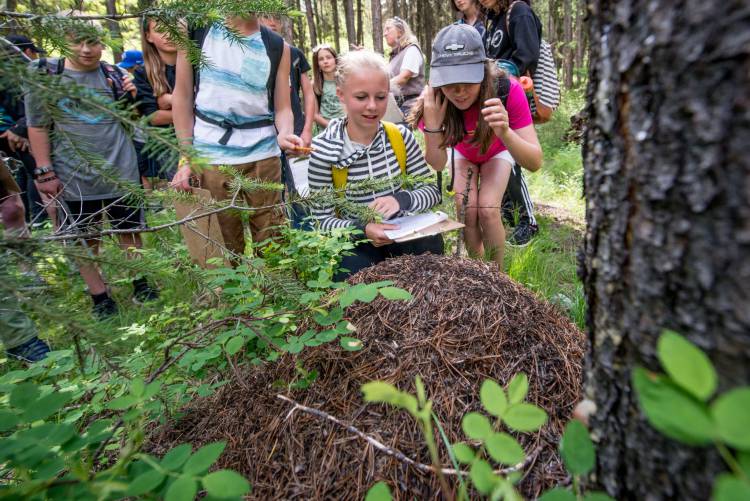
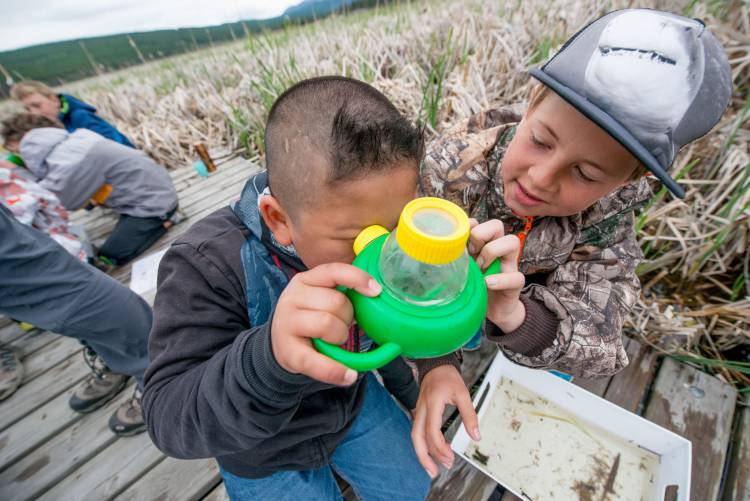
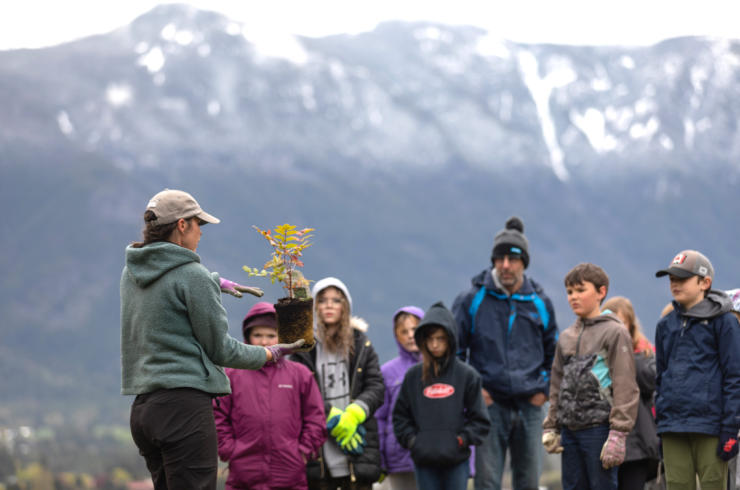
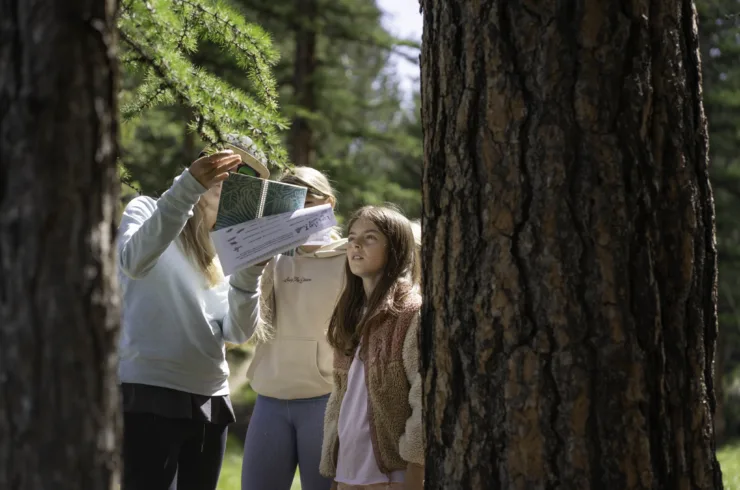
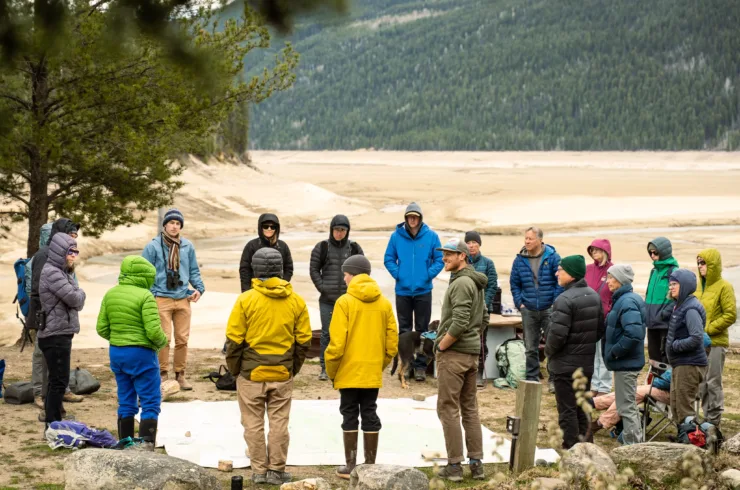
Classroom with Outdoors are all day, outdoor field trips — real experiences — that take intermediate classes outside to learn about the ecology in places they will grow to love.
Classes make an exciting journey to — and through — natural sites in their local areas. They take part in outdoor, hands-on learning opportunities to discover components of healthy ecosystems.
Ultimately, students develop an appreciation for the natural world and an ethic of environmental stewardship.
The programs are tailored to meet the needs of each grade level, from Grade 4 to Grade 7, and to meet B.C. Ministry of Education Science curriculum learning outcomes for each grade level.
Downloadable resources for teachers and students
(Requires a PDF reader such as Adobe Reader, which can be downloaded free here.)
Classroom with Outdoors 2011 poster (PDF)
Teacher Backgrounders and Resources (PDF files):
- Wetland Teacher Backgrounder
- Forest Teacher Backgrounder
- Old Growth Forest Teacher Backgrounder
- Grassland Teacher Backgrounder
- Wildsight waiver and photo release form
- Keeping the Wild in Sight postcard template
Student Backgrounders (PDF files):
- Wetland Student Backgrounder
- Forest Student Backgrounder
- Old Growth Forest Student Backgrounder
- Grassland Student Backgrounder
Grade 4 program: The magic of ecosystems
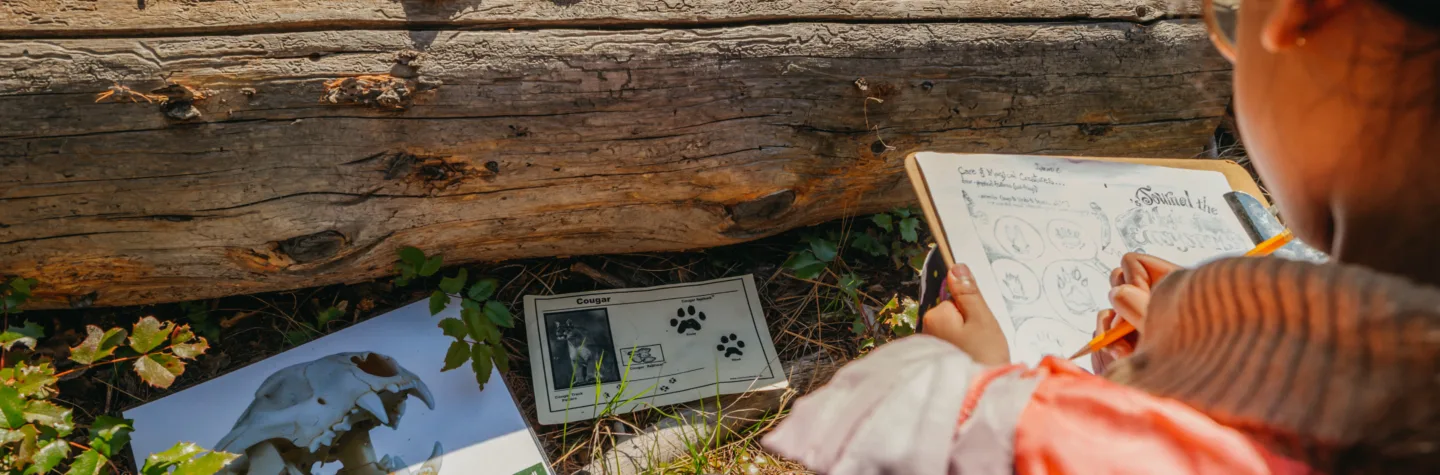
Using magic in nature, students learn about herbology, photosynthesis “enchantment”, care of “magical creatures”, ingredients of ecosystem “potion”, the magical web of life and stewardship “spells.” The field trip is designed to fit specifically with Grade 4 intermediate curriculum. Learning outcomes are in Life Sciences and Earth and Space Science.
Grade 4 teacher resources (PDF files):
- Grade 4 Pre-Field Trip Activities
- Grade 4 Post-Field Trip Activities
- Grade 4 Student Quiz
- Grade 4 Teachers Quiz Key
Attention Grade 4 Teachers!
Request a Classroom with Outdoors field trip.
Grade 5 program: Web of Life
In witnessing the drama of ecosystem survival, students discover the complex interconnections between producers, consumers and decomposers, as well as the non-living elements that support life. Students appreciate and consider the concept of renewable and non-renewable resources as they play their own game of survival.
Grade 5 teacher resources (PDF files):
- Grade 5 Pre-Field Trip Activities
- Grade 5 Post-Field Trip Activities
- Grade 5 Nature Quiz
- Grade 5 Teachers Quiz Key
Attention Grade 5 Teachers!
Request a Classroom with Outdoors field trip.
Grade 6 program: Diversity of life — nature’s services
Studying a local ecosystem through the eyes of traveling alien scientist/explorers, students learn the importance of scientific classification and the diversity of living species. The study of nature’s services leads to a discussion about how human society is supported by the processes of nature.
Key concepts:
- All living things in natural ecosystems belong to one of five kingdoms (Plants, Animals, Monera, Protista, Fungi.)
- The grouping of organisms reflects the evolutionary relationships among living things in natural ecosystems.
- Classification is the universal language used in the science community.
- The classification of all organisms is according to their internal and external features and form, among other criteria.
- Each group has different ways of coping with problems and specific adaptations in response to their environment.
- Humankind benefits from a multitude of resources and processes that are supplied by natural ecosystems. Collectively, these benefits are known as ecosystem services and include products like clean drinking water and processes like the decomposition of wastes.
- Upon completing the field trip students will:
- Recognize the specific characteristics of a wetland, grassland, forest or old growth forest.
- State the five kingdoms and give an example of two organisms from each.
- Recall the inverted triangle of the classification of organisms.
- Utilize a key to identify a simple plant or animal.
- Illustrate a simple food web based on the food chain and predator-prey relationships.
- Understand the concept of valuing ecosystems for the 17 life-sustaining services that they provide. Be able to describe several of these services.
- Recite the pledge to conserve natural ecosystems.
Grade 6 teacher resources (PDF files):
- Teacher Program Summary
- Grade 6 Pre-Field Trip Activities
- Grade 6 Field Trip Itinerary
- Grade 6 Post-Field Trip Activities
- Grade 6 Nature Quiz
- Grade 6 Teachers Quiz Key
Attention Grade 6 Teachers!
Request a Classroom with Outdoors field trip.
Grade 7 program: Lessons from nature
Nature has many wise ways to help us learn how to live more sustainably on the planet and in our society. Students investigate ecological principles and learn valuable lessons for life from our wisest and oldest of teachers — nature itself! The program encourages students to review and synthesize concepts learned in Grade 7 Life Sciences.
Upon completing the field trip students will be able to:
- Define an ecosystem and describe the functioning parts and interrelationships of non-living and living things.
- Describe some ecosystem processes such as: nutrient cycling, photosynthesis and food webs.
- Understand the links between healthy ecosystems and healthy human communities.
- Understand concepts such as sustainability and ecological footprint, and be able to use these concepts in making personal choices.
Grade 7 teacher resources (PDF files):
Attention Grade 7 Teachers!
Request a Classroom with Outdoors field trip.